
Nestled on the southwest coast of Sri Lanka, Galle Fort is a mesmerizing seaside fortress where history, culture, and coastal beauty collide. This UNESCO World Heritage Site is a living, breathing monument that blends European colonial architecture with South Asian traditions.
Whether you are planning a trip to Sri Lanka or looking to learn more about this ancient walled city, this complete travel guide covers everything you need to know about Galle Fort.
A Brief History of Galle Fort
Long before European colonizers arrived, Galle was a bustling ancient trading port frequented by Greek, Roman, Arab, and Chinese merchants.
- The Portuguese Era (1505): The Portuguese were the first Europeans to land in Galle. They built a rudimentary earthen fort named “Santa Cruz”.
- The Dutch Golden Age (1640): The Dutch East India Company (VOC) captured the fort in 1640. They replaced the simple Portuguese walls with massive granite and coral ramparts, establishing the iconic fortifications we see today.
- The British Empire (1796): The British took peaceful control in 1796, maintaining the fort as an administrative center and adding structures like the famous lighthouse.
Today, the fort remains beautifully preserved, having even shielded the inner town from the devastating 2004 Indian Ocean tsunami.
Top Things to Do in Galle Fort
1. Take the Ramparts Sunset Walk
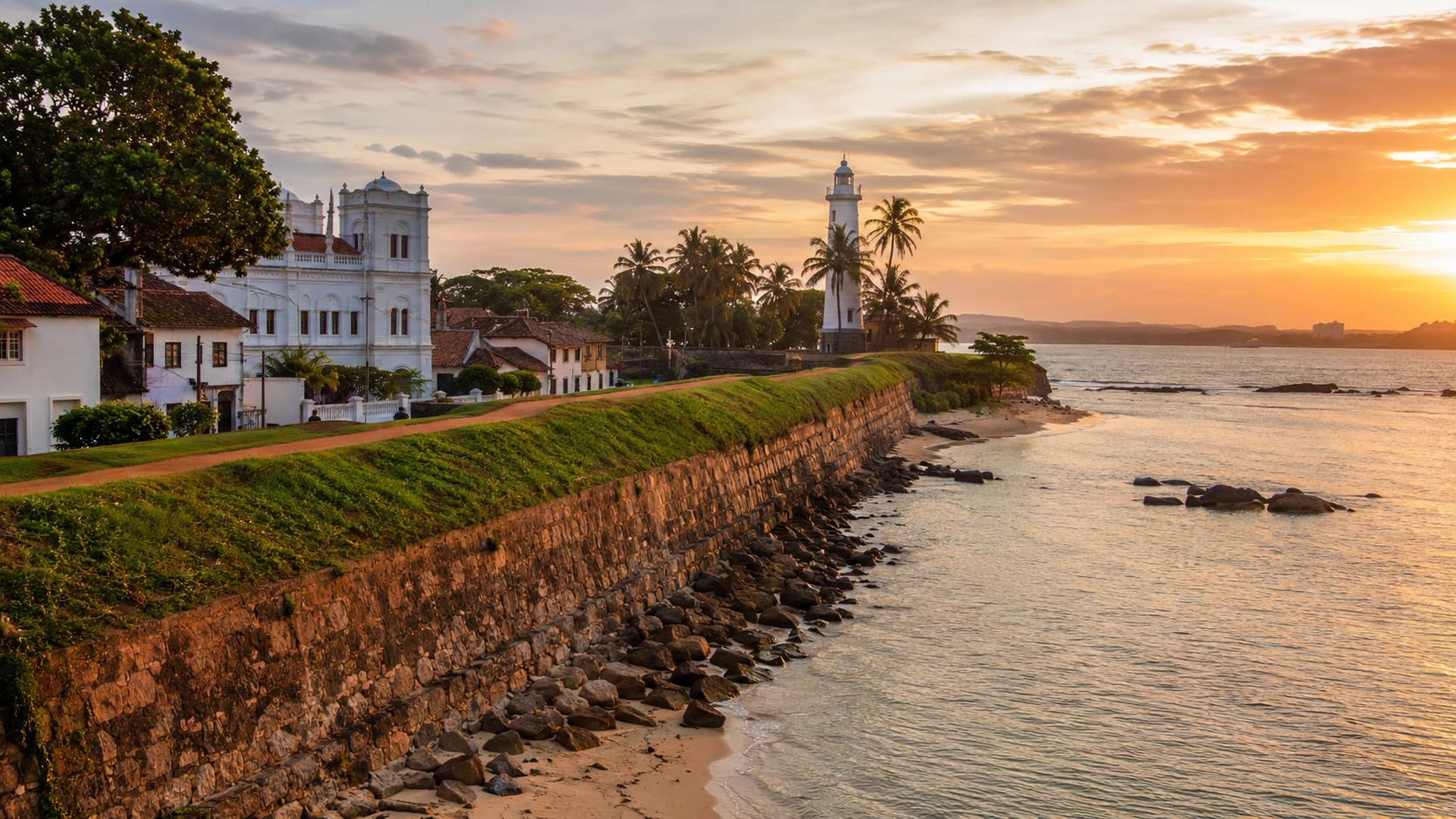
The absolute best way to experience the fort is by walking its outer stone walls. Start near the historical Clock Tower and follow the pathway along the ocean as the sun sets over the Indian Ocean.
2. Photograph the Galle Lighthouse
Built in 1939 to replace a previous British-era lighthouse, this iconic white beacon stands 26.5 meters tall. Framed by towering palm trees, it is the most photographed spot in the entire fort.
3. Explore the Cobblestone Streets of Pedlar Street
Pedlar Street and Lighthouse Street are the artistic and commercial heart of the fort. The narrow lanes are lined with beautifully restored Dutch-style villas that now house boutique shops, art galleries, and vibrant cafes.
4. Visit the Historic Churches and Mosques
Galle Fort is home to a wonderfully diverse, multi-religious community. Be sure to stop by:
- The Dutch Reformed Church (Groote Kerk): Built in 1755, featuring floors paved with historic gravestones.
- All Saints Anglican Church: A Victorian Gothic-style church built in 1868.
- Meeran Mosque: A unique 1904 mosque that blends Victorian, baroque, and Islamic architectural styles.
5. Shop and Dine at the Old Dutch Hospital
Dating back to the 17th century, this colonnaded colonial building was once a Dutch medical facility. Today, it is a trendy shopping and dining precinct where you can enjoy local seafood, craft beer, and purchase authentic Sri Lankan souvenirs.
Quick Travel Tips for Visitors
- Entrance Fee: There is no entrance fee to enter Galle Fort. It is completely free to wander the streets and walk the ramparts.
- Best Time to Visit: The dry season runs from December to April. To beat the tropical heat, explore the fort in the early mornings or late afternoons.
- Getting There: Galle is located 113 km south of Colombo. You can easily reach it via the southern expressway (about 2 hours by taxi) or take the scenic coastal train from Colombo Fort station.
- Getting Around: The fort is incredibly pedestrian-friendly. Pack comfortable walking shoes as the best way to explore its hidden alleyways is on foot.