
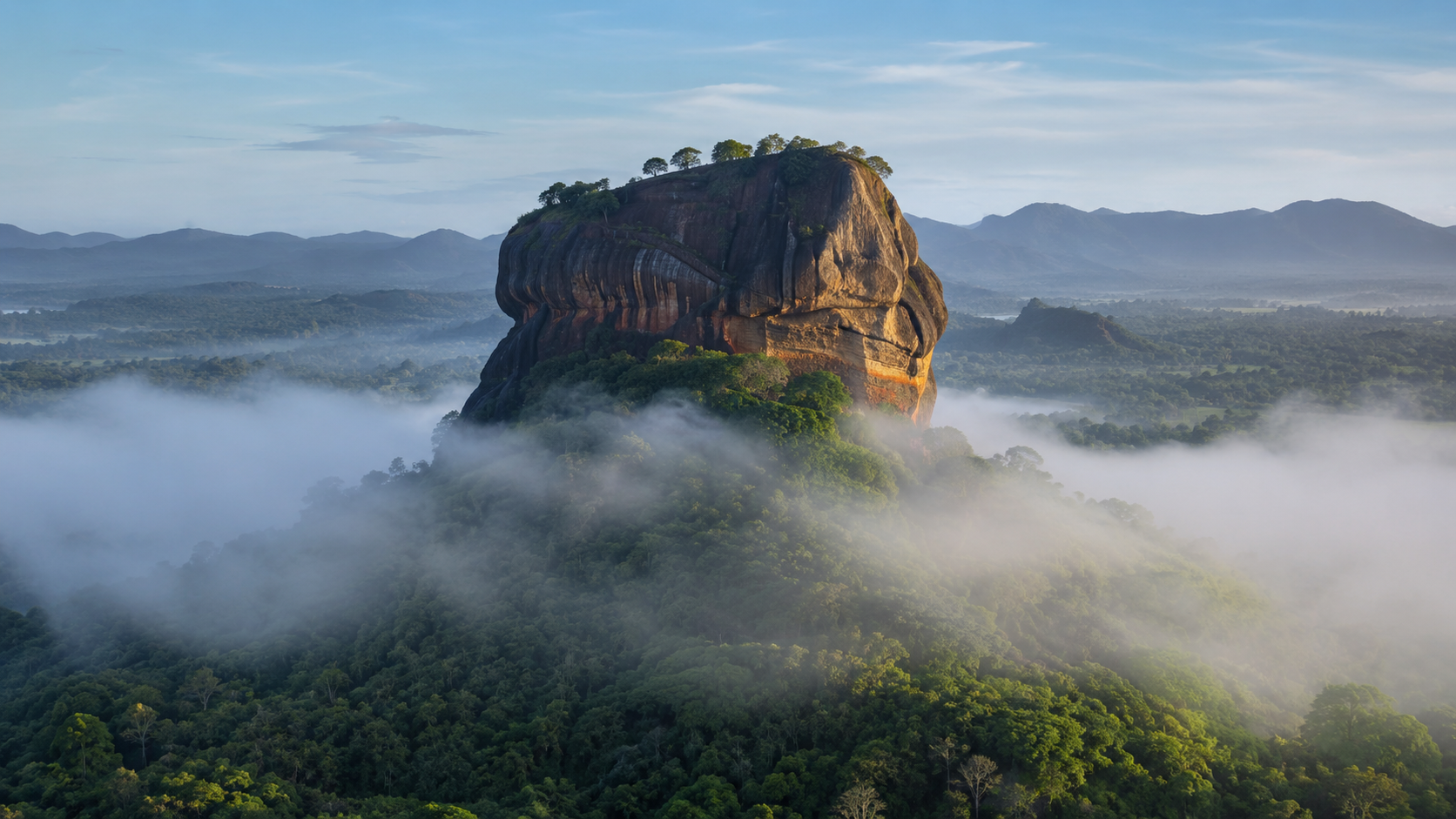
Rising dramatically above the central plains of Sri Lanka, the ancient rock fortress of Sigiriya is one of the most jaw-dropping wonders of the ancient world. Designated as a UNESCO World Heritage Site in 1982, this massive 200-meter-high granite peak holds the ruins of a brilliant, short-lived civilization. From dark royal betrayals to mind-boggling engineering that still works today, Sigiriya (Lion Rock) is a must-visit destination for anyone traveling to Sri Lanka.
Here is everything you need to know about the history, architecture, and visitor tips for Sigiriya Rock Fortress.
The Dark History and Legend of Lion Rock
Sigiriya’s story reads like a dramatic historical script. While the surrounding caves were used by Buddhist hermit monks as early as the 3rd century BC, the site transformed drastically in the 5th century AD.
King Kashyapa (477–495 AD), the son of a king and a non-royal consort, seized the throne by brutally murdering his father, King Dhatusena. Fearing a retaliatory attack from his exiled half-brother and rightful heir, Moggallana, Kashyapa abandoned the traditional capital of Anuradhapura. He chose the impregnable rock of Sigiriya as his new stronghold and royal palace.
Kashyapa turned the peak into a luxurious, fortified heaven designed to look like the mythical celestial city of Alakamanda. However, his reign lasted only 18 years. When Moggallana returned with an army, Kashyapa was defeated in battle, and the fortress was abandoned by royalty, later serving again as a Buddhist monastery until the 14th century.
Key Highlights to See at Sigiriya
1. The Royal Water Gardens
At the base of the rock lies one of the oldest landscaped gardens in Asia. The complex network of symmetrical water terraces, boulder gardens, and terraced lawns reveals an advanced understanding of hydraulics. The underground clay pipes and gravity-fed stone fountains still fill up and work during the rainy season, over 1,500 years after they were built.
2. The Sigiriya Frescoes
Halfway up the rock face, sheltered in a natural cave depression, are the world-famous Sigiriya Maidens. These stunning 5th-century frescoes depict elegant, colorful celestial nymphs (Apsaras) holding flowers. They represent some of the finest surviving examples of ancient Sri Lankan art.
3. The Mirror Wall
Originally, this brick wall was coated in a highly polished plaster made from egg whites, lime, and wild honey so bright that the king could see his reflection as he walked by. Today, it is famous for the “Sigiri Graffiti”—hundreds of verses and impressions scratched into the plaster by visitors and pilgrims between the 8th and 13th centuries, offering a fascinating look at ancient tourism.
4. The Lion Gate
The naming of “Sigiriya” comes from Sinhagiri, meaning Lion Rock. On a flat plateau halfway up the climb, visitors are greeted by a monumental pair of lion paws carved directly out of the stone. Originally, a massive brick lion head guarded the staircase, and travelers had to walk directly through the lion’s open mouth to reach the summit.
5. The Summit Palace Ruins
The flat, 1.5-hectare summit holds the foundations of the royal palace complex. Here you can explore the outer ramparts, the royal bathing pools carved out of solid rock, and the stepped terraces that offer panoramic 360-degree views of the surrounding green jungles and distant mountains.
Practical Travel Tips for Visiting Sigiriya
- Best Time to Visit: Start your climb early in the morning (7:00 AM) or late in the afternoon (3:30 PM) to avoid the intense tropical heat and the largest crowds.
- The Climb: There are roughly 1,200 steps to reach the summit. It takes about 1.5 to 2 hours to walk up and down at a comfortable pace.
- What to Wear: Wear comfortable walking shoes with good grip. Dress respectfully (shoulders and knees covered) out of respect for the historical and spiritual nature of the site.
- Stay Hydrated: Bring plenty of bottled water, as there are no shops or facilities once you pass the main ticketing checkpoint.
- Respect the Art: Photography is strictly prohibited in the Fresco gallery to preserve the ancient pigments from camera flashes.
Sigiriya stands as a timeless testament to ancient engineering, brilliant urban planning, and artistic mastery. No trip to Sri Lanka’s Cultural Triangle is complete without standing between the massive paws of the Lion Rock and looking out over the jungle canopy below.