
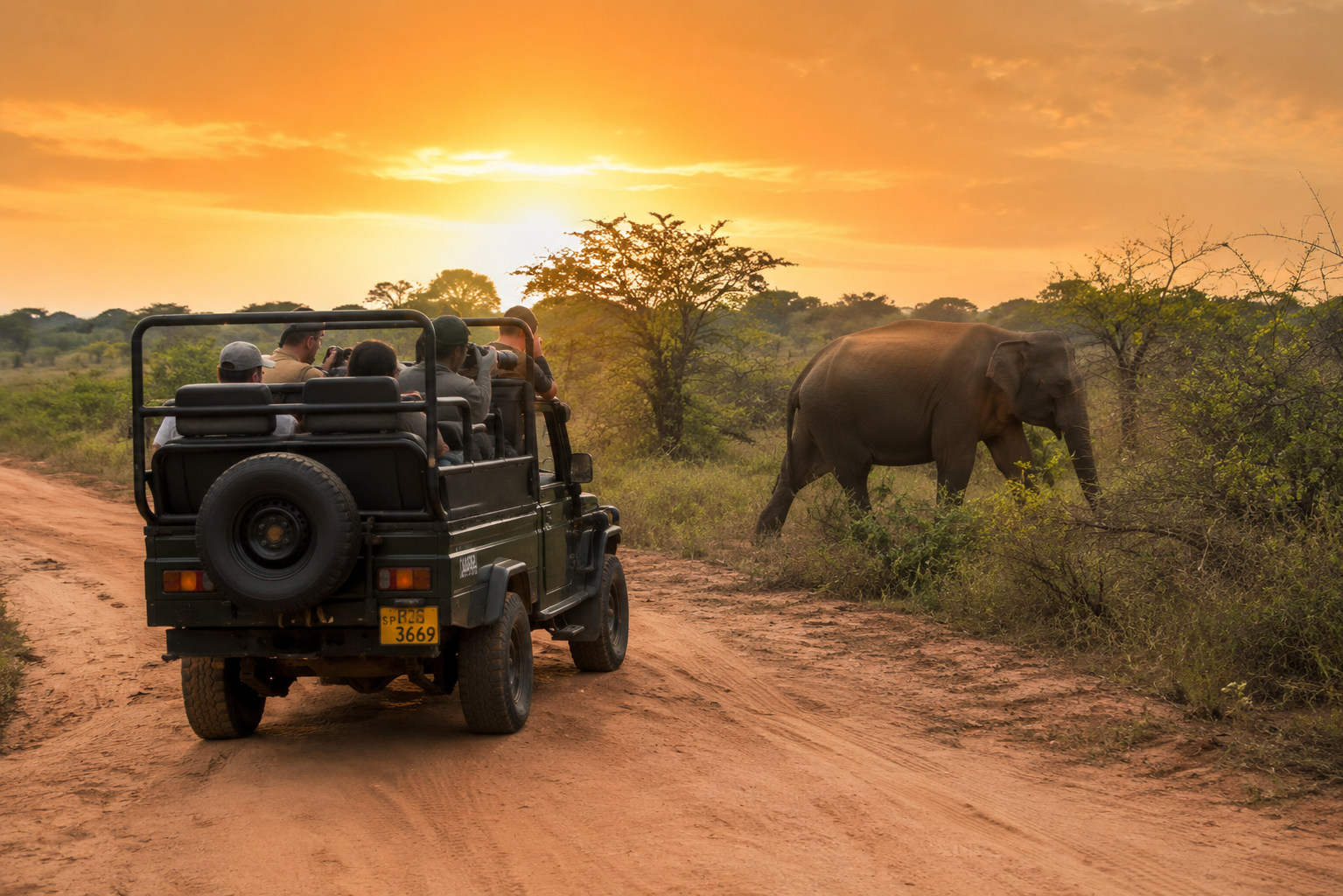
If there is one destination that belongs at the absolute top of your Sri Lanka travel bucket list, it is Yala National Park. As the country’s most famous wildlife sanctuary, Yala offers a classic, raw, and thrilling safari experience that rivals the great plains of Africa.
Spanning over 979 square kilometers of semi-arid scrublands, lush monsoon forests, brackish lagoons, and dramatic coastline, Yala is a sprawling ecosystem where ancient wilderness meets the Indian Ocean.
Whether you are a seasoned wildlife photographer or a traveler looking for an unforgettable adventure, this guide covers everything you need to know before booking your Yala National Park safari.
Why Yala? The Ultimate Spot for Leopard Sightings
Yala National Park is globally renowned for hosting one of the highest densities of leopards in the world. The resident subspecies, the Sri Lankan leopard (Panthera pardus kotiya), is the island’s apex predator. Unlike leopards in other parts of the world, which remain elusive and strictly nocturnal to avoid larger predators, Yala’s leopards are the undisputed kings of the jungle.
While a leopard sighting is never 100% guaranteed, Yala Block 1 (the most visited zone of the park) offers your best statistical chance anywhere on earth to watch these majestic cats lounging on massive granite boulders or stalking prey through the scrub.
Beyond Leopards: The Incredible Wildlife of Yala
While the big cats steal the spotlight, Yala is home to a staggering array of biodiversity. A single game drive can bring you face-to-face with a massive variety of species:
- Asian Elephants: Large herds roam the park, and it is common to spot them bathing in watering holes or grazing in the grasslands.
- Sri Lankan Sloth Bears: A rare and highly sought-after sighting, especially during the fruiting season (May to July) when they feed on sweet Palu fruits.
- Crocodiles & Water Buffalos: Found lounging in the park’s scenic lagoons and lakes.
- Avian Wonders: Yala is a paradise for birdwatchers, harboring over 215 bird species, including painted storks, colorful bee-eaters, and majestic peacocks.
The Best Time to Visit Yala National Park
Yala is technically open year-round, but your experience will vary wildly depending on the season. Because wildlife congregates around drying water holes, the dry season offers the most predictable and frequent animal sightings.
- February to August (Peak Season): This is the prime time for safaris. The dry weather thins out the vegetation, making it much easier to spot animals through the trees.
- May to July (Sloth Bear Season): The local Palu trees bear sweet fruit, drawing the shy sloth bears out into the open.
- September to mid-October (Closure Period): Note: Yala’s main zone (Block 1) typically closes for about six to eight weeks during this time to allow the ecosystem to recover from the dry season.
- November to January (Lush & Green): The monsoons return, turning the park into a stunning, lush paradise. While birdwatching is exceptional with migratory species arriving, spotting leopards can be more challenging due to the dense green foliage.
Morning vs. Afternoon Safaris: Which is Better?
Most travelers are torn between waking up at dawn or heading out in the midday heat. Here is how the two standard 3-to-4-hour safari slots compare:
| Safari Option | Best For | Pros | Cons |
| Morning Safari (6:00 AM – 10:00 AM) | Active predators, cooler weather, birdwatching | High animal activity right at sunrise; beautiful golden hour photography light | Very early start (usually leaving your hotel by 5:00 AM); longer entry lines |
| Afternoon Safari (2:30 PM – 6:00 PM) | Sleeping leopards, quiet tracks, dramatic sunsets | Excellent chances of seeing leopards waking up for evening hunts; fewer jeeps in the park | Can be very hot and dusty during the first hour |
5 Essential Tips for a Flawless Yala Safari
1. Book a Private Jeep
Avoid shared safari packages. Booking a private jeep gives you full control over your itinerary, allowing you to spend as much time as you want photographing a specific animal without feeling rushed.
2. Protect Yourself from the Elements
The sun in the dry zone is intense. Even though safari jeeps have canopy covers, the wind, dust, and glare will catch up to you. Pack high-SPF sunscreen, polarized sunglasses, a light scarf/buff to block the dust, and plenty of water.
3. Manage Your Expectations
Yala is a wild national park, not a zoo. Some days you will see three leopards, and other days you might only see deer and peacocks. Embrace the thrill of the chase and appreciate the entirety of the park’s diverse ecosystem.
4. Beat the Crowds
Block 1 can get heavily congested with jeeps, especially when a leopard is spotted. Talk to your driver about exploring quieter tracks or entering through less crowded sectors like Block 5 or Lunugamvehera to enjoy a peaceful, intimate wilderness experience.
5. Dress in Earthy Tones
Wearing bright whites, neon yellows, or hot pinks can startle the wildlife. Opt for neutral colors like olive green, khaki, beige, or brown to blend seamlessly into the environment.