
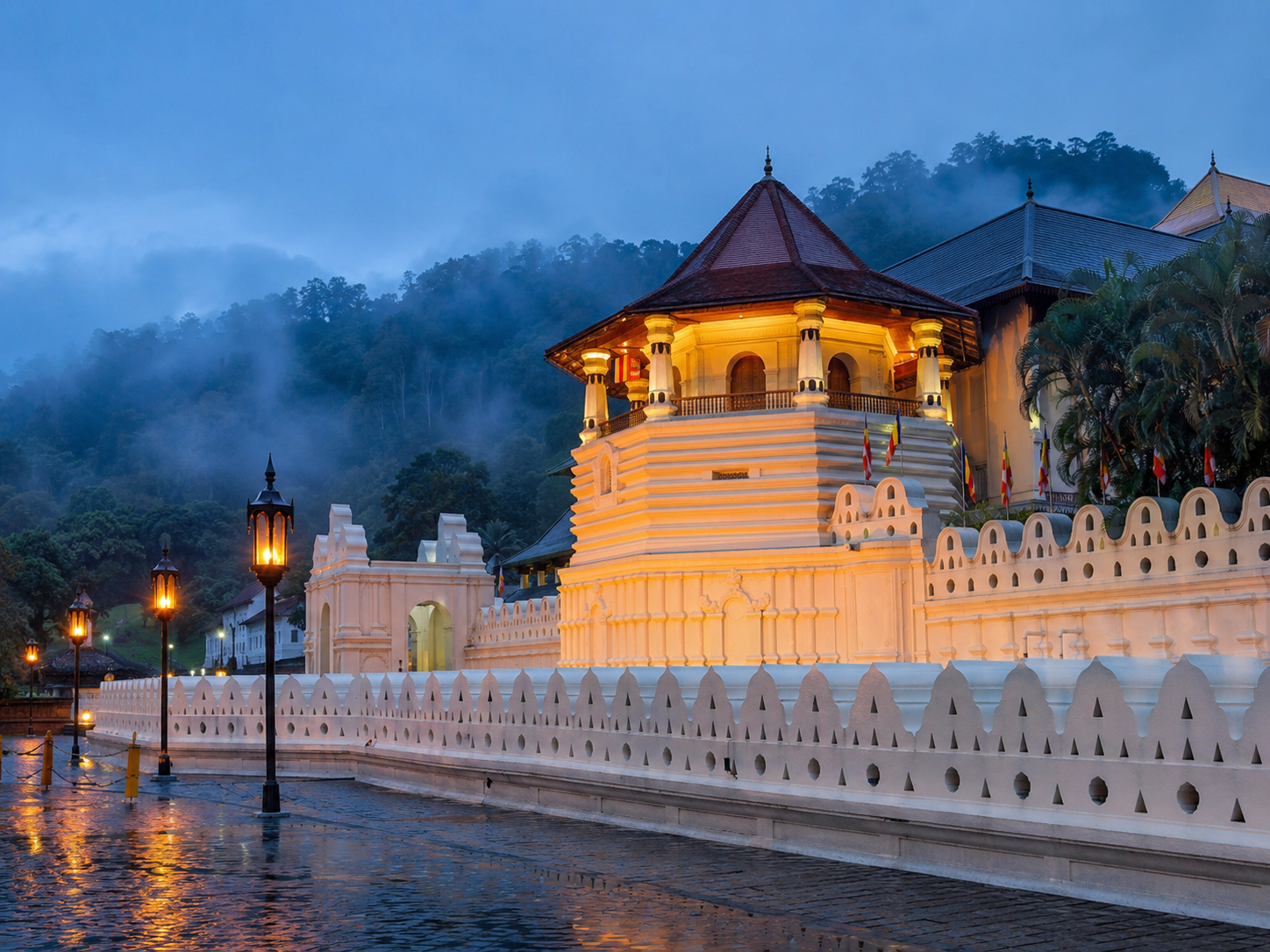
Nestled in the lush hills of Sri Lanka’s cultural capital, the Temple of the Sacred Tooth Relic (known locally as Sri Dalada Maligawa) is one of the most revered Buddhist pilgrimage sites in the world. As a UNESCO World Heritage Site, this magnificent golden-roofed temple complex houses a priceless relic—the left canine tooth of Gautama Buddha.
Whether you are a spiritual traveler, a history enthusiast, or a first-time visitor to Sri Lanka, this comprehensive guide covers everything you need to know before visiting this architectural and spiritual masterpiece.
The Sacred History of the Tooth Relic
The story of the Tooth Relic is a fascinating mix of historical records and religious legends spanning over 1,700 years. According to Buddhist tradition, the relic was retrieved from the Buddha’s funeral pyre in India in 543 BCE.
For centuries, a powerful belief reigned in ancient India and Sri Lanka: whoever possessed the Sacred Tooth Relic held the divine right to rule the land.
To protect it from war and destruction, the relic was secretly smuggled into Sri Lanka in the 4th century CE by Princess Hemamala and Prince Dantha. They disguised themselves as ascetics and hid the tooth safely inside the coils of the princess’s hair.
As different kingdoms rose and fell, the relic moved across the island, eventually finding its permanent resting place in Kandy in the late 16th century.
Top Things to See at Sri Dalada Maligawa
1. The Inner Shrine (Vahalkada)
The heart of the temple complex is a two-story building where the sacred relic is housed. While the actual tooth is safely kept inside seven nested, jewel-encrusted golden caskets shaped like stupas, you can view the outer casket during the daily ritual times (pujas).
2. The Paththirippuwa (The Octagonal Pavilion)
Built by the last king of Kandy, Sri Wickrama Rajasinghe, in the early 19th century, this striking octagonal tower initially served as a royal lookout point. Today, it houses a vast library of ancient palm-leaf manuscripts and religious texts.
3. The Royal Palace Complex and Audience Hall
Directly adjacent to the temple is the former residence of the Kandyan monarchs. The Audience Hall is an open-air pavilion featuring intricately carved wooden pillars that showcase classical Kandyan architecture at its peak.
4. The International Buddhist Museum
Located within the outer grounds, this museum offers an insightful journey through the spread of Buddhism across Asia, showcasing exhibits, photographs, and artifacts from several different countries.
Experience the Kandy Esala Perahera
If you visit Sri Lanka during July or August, you may have the once-in-a-lifetime opportunity to witness the Kandy Esala Perahera.
As one of Asia’s oldest and grandest cultural pageants, this ten-day festival honors the sacred relic with a series of spectacular nightly processions. The streets of Kandy come alive with hundreds of traditional Kandyan dancers, drummers, fire-breathers, whip-crackers, and beautifully caparisoned elephants, culminating in a magnificent parade of the replica casket.
Essential Visitor Information
To ensure a smooth and respectful visit, keep these practical details in mind:
Opening Hours and Daily Puja Times
The temple is open daily from 5:00 AM to 8:00 PM.
To witness the traditional drumming and ritual offerings (Pujas), plan your visit around these daily ceremony times:
- Morning Puja: 5:30 AM – 7:00 AM
- Midday Puja: 9:30 AM – 11:00 AM
- Evening Puja: 6:30 PM – 8:00 PM
Strict Dress Code and Etiquette
As the temple is a deeply sacred place of worship, rules are strictly enforced at security check-points:
- Coverage: Your shoulders and knees must be fully covered. Avoid shorts, short skirts, or sleeveless tops. Wearing light-colored or white clothing is highly recommended as a sign of respect.
- Footwear: You must remove your shoes before entering the inner temple. There is a secure shoe storage counter at the entrance where you can leave them for a small tip. Socks are permitted if you prefer not to walk barefoot.
- Photography: Taking photos of the temple architecture is allowed, but never turn your back to a Buddha statue to take a photo or selfie, as this is considered highly disrespectful.